Why 58 Percent of Truckloads in the US Moved Underutilized in 2024: Key Questions Answered
Ready to try 精东传媒?
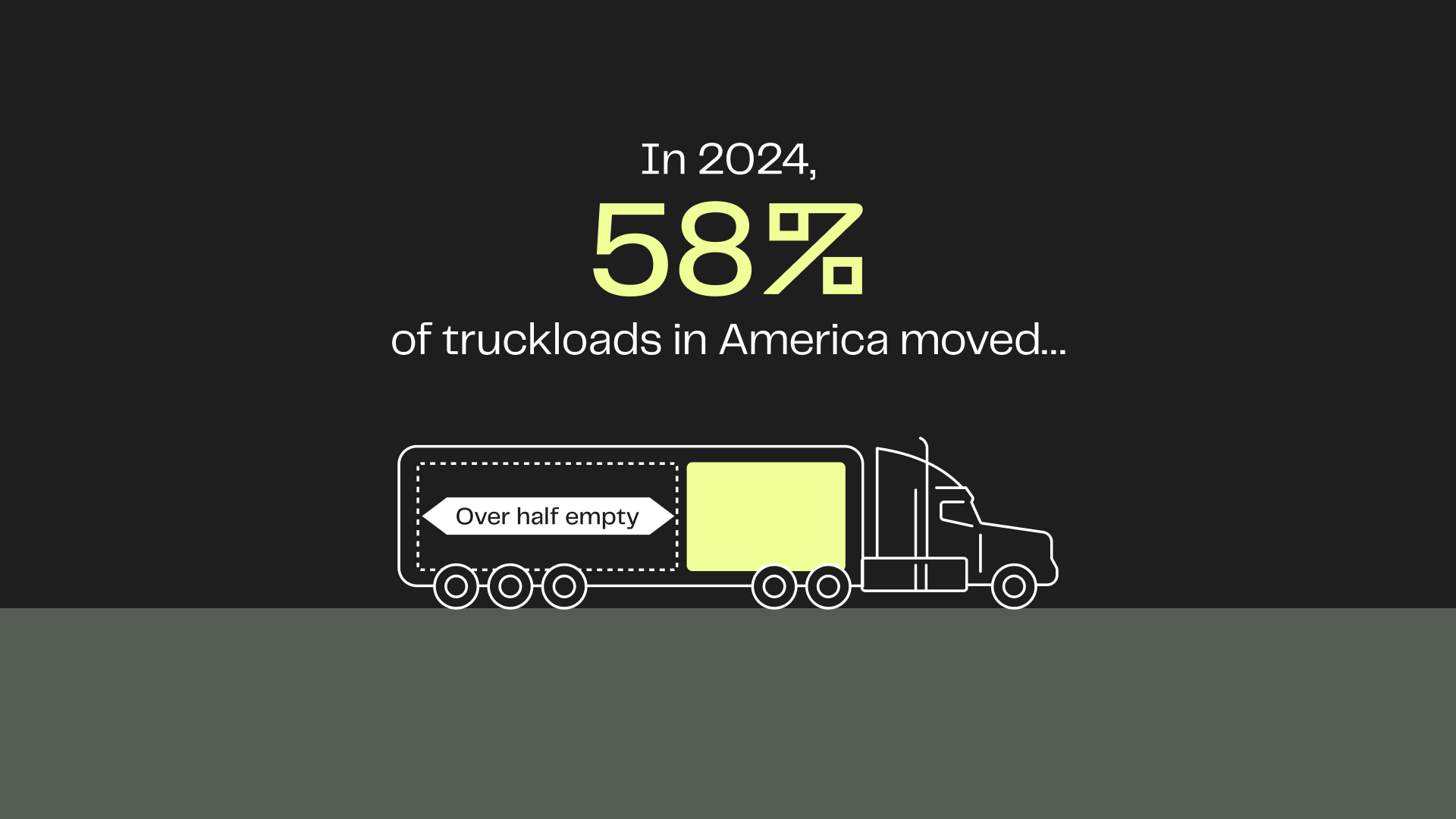
Carrier sign upDid you know that in 2024, , leaving an average of 34 feet of deck space empty? That鈥檚 equivalent to one in three truckloads moving completely empty.
This marks a significant increase from 2023, when 43% of truckloads moved partially empty. The trend correlates with the soft freight market, where lower costs make shipping non-optimized truckloads less painful.
While enterprise shippers are slightly better at utilizing their freight space, this issue persists across businesses of all sizes and industries. Understanding the causes and solutions for underutilized truckloads is critical to creating more efficient, cost-effective, and sustainable freight operations.聽
What Is an Underutilized Truckload?聽
An underutilized truckload refers to a shipment transported in a dedicated truckload that doesn't fully use the 53 feet of trailer space or doesn鈥檛 reach the maximum weight capacity of 40,000 pounds.聽
This inefficiency arises when trucks are dispatched half-full or without fully leveraging the available carrying capacity.聽
Why Do Underutilized Truckloads Happen?聽
1. Speed Requirements聽
Shippers frequently move partially empty truckloads to meet tight delivery deadlines. According to :
- 45.1% of shippers choose truckloads because they doubt other modes will deliver freight on time.
- 43% of shippers choose truckloads when they鈥檙e uncertain other methods will deliver damage-free.
Fast-paced supply chains prioritize speed, often at the expense of truckload efficiency.聽
2. Unpredictable Order Sizes聽
Fluctuating order sizes challenge optimization. Big-box retailers often drive these erratic demands, pushing businesses to ship freight immediately鈥攅ven if the truck is only partially full.聽
- Just-in-time production systems add to the complexity. These systems focus more on using transportation to get their products to market quickly, regardless of truck utilization.
3. Less-Than-Truckload (LTL) Cutoffs聽
For shipments exceeding the , shippers face a dilemma. To ensure reliable delivery, they often send mid-sized freight in partially empty truckloads instead of risking delays or damage via LTL shipping.聽
4. Flexibility Challenges聽
Shippers frequently operate under uncertain forecasts and don鈥檛 always know the exact volume of freight until it鈥檚 time to load. This results in trucks dispatching regardless of their capacity utilization level.聽
Alternatives to Underutilized Truckloads聽
Multi-Stop Truckloads聽
Shippers often consolidate shipments into multi-stop truckloads to maximize freight utilization. While this method offers potential benefits, it also presents logistical challenges and it鈥檚 limited to shippers with enough density to create their own loads.聽
Common Multi-Stop Pain Points:
- Managing carrier operations (54.7%)
- Accommodating delivery appointments (47.2%)
- Out-of-route mileage (46%)
- Difficulty filling the entire trailer (38.5%)
- Insufficient density to build multi-stops (23%)
- Lack of sufficient tools (23%)
Shippers increasingly rely on managed transportation providers (77%) and transportation management systems (TMS) (72%) to overcome these roadblocks. However, 96% of shippers report dissatisfaction with their multi-stop programs, highlighting an opportunity for innovation.聽
Shared Truckloads聽
One of the most effective alternatives to underutilized truckloads is Shared Truckload (STL). This solution pools shipments from multiple shippers heading in the same direction into a single truckload, optimizing space and reducing costs.聽
Benefits of Shared Truckload:
- Move freight immediately without waiting to fill a full truckload.
- Preserve truckload-level service.聽
- Enjoy cost savings compared to underutilized truckload.聽
- Save time and avoid delays associated with traditional LTL.
At the forefront of STL innovation is 精东传媒鈥檚 Shared Truckload service, 精东传媒Direct庐. Powered by advanced AI pooling technology that:
- Matches shipments traveling in the same direction.
- Reduces carbon emissions by up to 40% compared to traditional modes.
- Eliminates risks associated with terminals, ensuring damage-free and delay-free deliveries.
Why Choosing the Right Alternative Matters聽
The growing prevalence of underutilized truckloads isn鈥檛 just a challenge for shippers; it鈥檚 a call to revolutionize freight efficiency. Whether through multi-stop programs or Shared Truckload solutions, addressing this inefficiency can lead to:
- Cost reduction by minimizing waste.
- Improved operational efficiency with better load planning.
- A positive environmental impact by reducing empty miles and carbon emissions.
Final Thoughts聽
The fact that 58% of truckloads in the US moved underutilized in 2024 reflects an urgent need for more efficient freight solutions. Businesses face a unique opportunity to optimize truckload utilization, save costs, and drive sustainability.聽
By leveraging innovative approaches like Shared Truckload, shippers can deliver on customer expectations while saving money and reaching environmental goals.聽
Curious how STL can improve your freight operations? Try 精东传媒鈥檚 精东传媒Direct庐 迟辞诲补测.听
鈥�