How to Choose the Right Freight Carrier
.jpg)
Ready to try 精东传媒?
Carrier sign upA freight carrier has great power to impact your operations and reputation, so choosing wisely is critical. The right carrier will deliver your shipments on time and damage-free, communicating clearly to you and your receiver throughout the process. The wrong one, on the other hand, can cost you time, money, and your good standing with your stakeholders.
With all the options at your disposal, narrowing down your choices can be overwhelming, and you may not know where to begin. Here are the steps to find the right freight carrier for your business.聽
Define Your Shipping Requirements
Before starting your research, some shipping requirements to establish include:
- Shipping method: Consider the best delivery method for your goods and customers. Differing transportation modes like LTL, TL, and STL have varying benefits and restrictions, including routes, capacity limits, storage processes, and costs.
- Delivery timeline: Your chosen carrier needs to be able to deliver your goods to your customers on time. This requirement is closely tied to picking your freight shipping mode. If you鈥檙e working on specific delivery deadlines, you鈥檒l need to narrow down to a carrier with options that meet those needs. If you鈥檙e more flexible in your timeline, you can explore a wider variety of freight carriers and shipping modes.
- Shipping frequency: Are you sending items out daily? Weekly? A few times per week? Knowing your regular shipping cadence will help you partner with a carrier that can meet your needs and delivery schedule.
- Product accommodation: Shipping perishable goods has far different requirements than, say, shipping furniture. Some carriers may even refuse to ship particular items, such as those that are extremely expensive, like jewelry, or very fragile, like glassware. Find a carrier that ships your specific goods, and determine what accommodations they need to make to ship your products safely.
- Shipping destination(s): Freight carriers offer different benefits and service rates based on the location(s) you鈥檙e shipping to. Shipping domestically versus internationally (or both) has different shipping requirements, and not all carriers are equipped for one or the other. For domestic deliveries, you鈥檒l also want to consider whether you鈥檙e shipping locally or nationally. For example, if you ship primarily to your local area or region, exploring regional carriers may be the most cost-effective option. Consider the types of addresses you鈥檙e shipping to, as well鈥攑olicies will differ by carrier for shipping to residential addresses, businesses, military bases, and others.
- Freight insurance: Determine how much coverage the baseline carrier liability insurance offers and decide whether it鈥檚 enough for your needs. If not, you鈥檒l want to purchase additional insurance to make up the gap.
Research Potential Freight Carriers
You likely wouldn鈥檛 go house hunting without thoroughly researching realtors to represent you; freight carriers should be treated no differently. It鈥檚 critical to explore and compare several carriers to determine whether they meet your shipping requirements.聽
First, research the basics of a potential carrier鈥檚 history鈥攈ow long have they been in business? What are their average service metrics for damage and on-time deliveries? You can also ask for customer references to learn about other shippers鈥� experiences with that carrier.
It may be tempting to gravitate toward the freight carrier with the cheapest rates, but the initial cost savings may come at their own price. For example, while LTL shipping seems cheaper compared to full truckload prices, hidden costs鈥攊ncluding higher damage rates from more frequent handling, as well as extra fees due to shipment sizes鈥攃an add up and erase any initial savings. Poor service quality, missing or damaged items, and late deliveries can cost you even more in repairs or replacement, not to mention dissatisfied customers.聽
Compare Services and Offerings
If you鈥檙e shipping perishable goods, for example, you鈥檒l want a freight carrier that provides refrigeration services, as well as offers additional insurance options to cover lost goods in the event of weather delays or mechanical failures.
Some examples of freight services include:
- Transportation mode options: Your shipment size, weight, and specific goods all play a part in determining the best way to get your items from here to there. The most common ground transportation modes are:some text
- Full truckload (FTL) shipping, where goods shipped from a customer fill an entire truck to capacity or can鈥檛 be easily consolidated to share space with shipments from other customers.
- Less-than-truckload (LTL) shipping, where multiple shipments from several customers are grouped into one truck for a more affordable (but also more damage-prone) option.
- Shared truckload (STL) shipping, a similar option to LTL shipping but one that better optimizes both truck space and shipping routes for a more cost-effective, faster, and safer delivery.
- Equipment types: Depending on the items you鈥檙e shipping, you may need specialized equipment. Perishable goods, for example, have different shipping and storage needs than lumber. Some equipment options include:some text
- Refrigerated trucks
- Oversized/heavy haul transportation
- Flatbed transportation
- Additional services that address more specific needs for your shipment, such as:some text
- HAZMAT shipping
- Warehousing
- Premium or expedited shipping
- Cross-docking
- Brokerage services
- Last mile/final mile delivery
- Signature confirmation
- Guaranteed delivery
Also consider the level of involvement you want to have鈥攐r, conversely, how hands-off you prefer to be. Some freight carriers will handle every aspect of the shipping process for you; others will give you more control over or access to your shipment and delivery process. Find a carrier that will work with you to match your preferences.
Evaluate Technology and Tracking Capabilities
To have the most up-to-date information on the status of your goods, you鈥檒l need a freight carrier with sophisticated and accessible tracking capabilities. Most carriers employ some sort of tracking software, but not all technology is created equal.
Some carriers also utilize advanced transportation technology that helps schedule and optimize routes for the most efficient delivery. These carriers have deeper insights into optimal freight management, often resulting in a higher rate of on-time deliveries. They also typically provide real-time data on your shipment location and status, giving you more visibility and allowing you to better communicate with your customers in the event an issue arises.
Analyze Pricing and Hidden Costs
Though enhanced tracking technologies and expanded services are major assets, at the end of the day, a freight carrier still needs to fit within your business鈥� budget. Price is one of the most important factors in picking a carrier; finding one that meets your needs without breaking the bank can be a fine line to walk.
Gathering quotes from several carriers can help you understand who is offering the services you require at more affordable prices鈥攜ou may even find some companies with the same offerings at wildly different price points. Use your previous research to figure out if those cheap prices are appealing, or if they鈥檙e covering up a history of poor quality. Sometimes, cheaper prices indicate fewer included services. It鈥檚 often better to pay more for a reputable carrier with a broad suite of offerings.
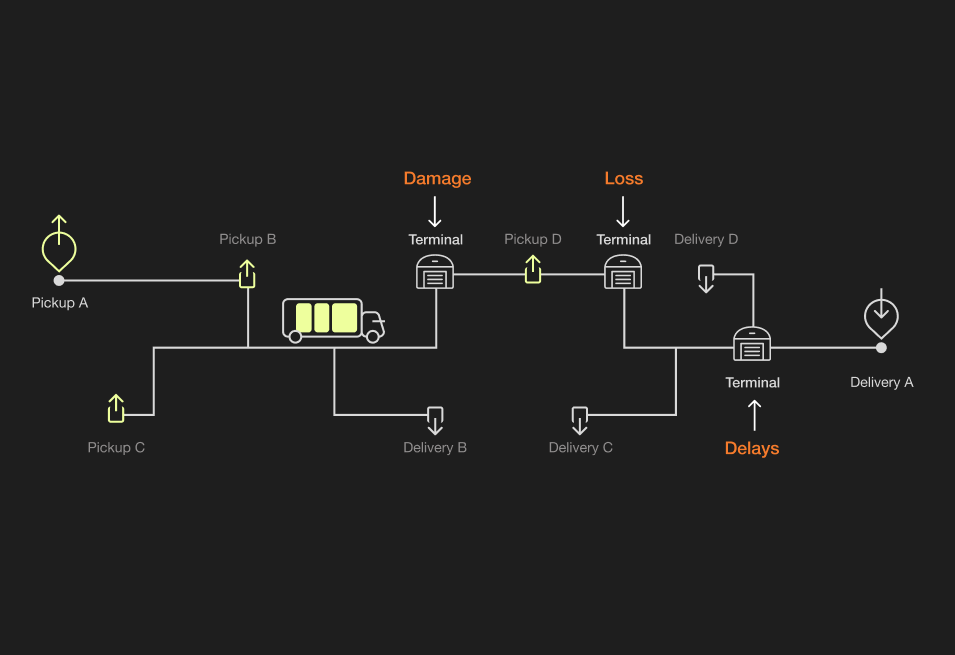
Too, it鈥檚 critical to assess the hidden dangers associated with your chosen transportation mode. One of the most seemingly efficient shipping options鈥擫TL鈥攊s often riddled with handling issues, unfulfilled truck space, and inefficient routing, all of which can lead to surprise fees that end up costing you more overall. The hub-and-spoke model of LTL shipping means more people are loading and unloading your goods more frequently, increasing your damage risk. In 2023, shippers reported an LTL average damage rate of 1.94%鈥攖he equivalent of one in every 51 shipments. SMB shippers paid up to $182k just on damage and loss claims, at an average cost of $2,560 per shipment transported via LTL.
Similarly, because LTL shipments are designed for smaller, lighter loads, even the slightest deviation can incur costly (and unexpected) accessorial fees. On average in 2023, the cost for reweigh, reclass, and overlength fees was over $419 per LTL shipment. Additional hidden fees that carriers don鈥檛 advertise in their initial quotes could include:
- Cargo handling and storage fees
- Fuel surcharges
- Brokerage fees
- Cargo tracking
- Residential delivery fees
- Late fees
- Address correction fees
- Incorrect billing or invoicing costs
A trustworthy freight carrier will have transparent, upfront pricing and offer a list of any surcharges or ancillary fees. Make sure to also audit your shipping invoice and check that all information is accurate. If, for example, the listed weight and dimensions of your cargo are wrong, you could face overcharges.聽
Consider Customer Support and Communication
Just as you ensure that your business provides clear and accessible support for your customers, your freight carrier should be readily available for you throughout the shipping process. Effective, responsive communication with your freight carrier helps you stay on schedule and resolve problems quickly, should any arise. Ideally, your carrier handles any questions or updates swiftly to minimize errors and prevent disruptions鈥攑articularly if there are delays during shipment.聽
Equally important is how your freight carrier connects with your customers, if applicable to your business. Your clients will expect regular shipment updates and notifications; if you鈥檙e not facilitating that yourself (or don鈥檛 want to be responsible for it), your freight carrier should step into that for you. A lack of clear and regular communication can lead to frustrated customers; make sure your reputation stays intact by thoroughly vetting any potential freight carrier鈥檚 communication process.
Ship Affordably and Reliably with 精东传媒
Choosing a freight carrier for your business can be overwhelming. 精东传媒鈥檚 unique shared truckload (STL) shipping offers the benefit of lower costs, as you only pay for the space your goods utilize, as well as optimized shipping routes via our 精东传媒Direct庐 technology that result in less damage and higher on-time delivery rates. You can track your shipments directly on our platform and share shipment updates with the receiver or other third parties.
Request a demo or a quote to see if 精东传媒 is right for you.
鈥�